Why can't you stand on one leg with the other ankle and shoulder against the wall?
A center-of-mass explanation for why lifting the free leg while your ankle and shoulder touch a wall makes you fall.
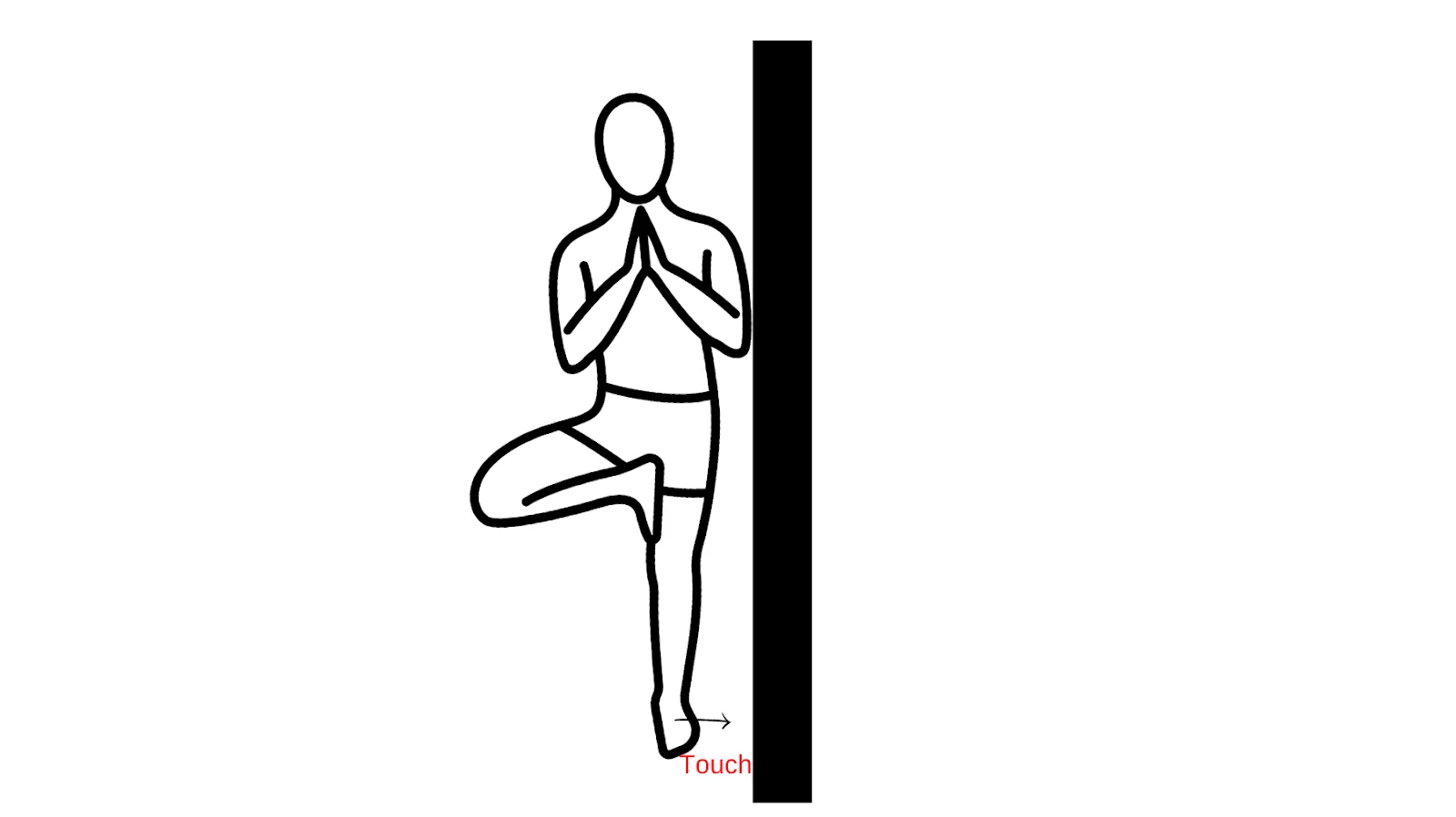
Can you stand with one leg lifted and the other with the ankle and shoulder touching the wall?
Just do this activity. Go against a flat wall and stand along the wall so that one side of your body is touching the wall. Make sure that your ankle and shoulder are touching the wall. Now try to lift the foot that is on the opposite side of the wall. Can you lift your leg? No, you can’t. Even if you can, you will fall to the floor.
If you want to know why, first you have to understand the center of mass. In simple words, the center of mass is where all the mass of the body is concentrated. In other words, it’s a place where the sum of a system’s mass seems to appear. For balancing a system, the body must be balanced about the center of mass. For instance, if you want to balance a 30-centimetre uniform scale, you need to place your finger just at the 15-centimetre place: pretty much the center. Because that’s where the center of mass exists for a uniform scale.
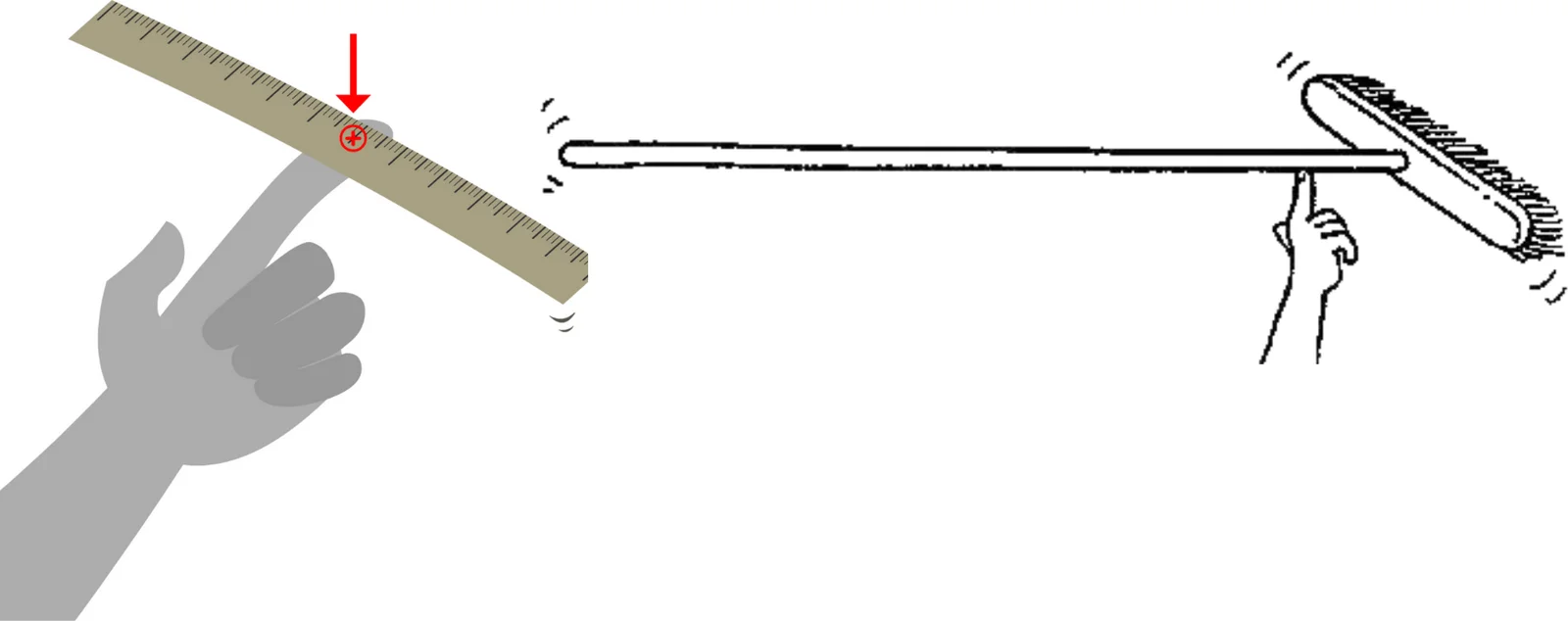
However, the center of mass does not always appear at the center. When the mass is not uniform in all places, the center of mass will tend to be concentrated on the heavier side of that object. For example, the center of mass of a broom is placed near the bristles.
So, where is the center of mass of a human body placed? In a standing posture, it is pretty much around the navel. Therefore, when we stand flat-footed, we need to keep the navel above the center of our feet. If we lean forward or backward, or sideways, we need to balance our feet according to the posture.
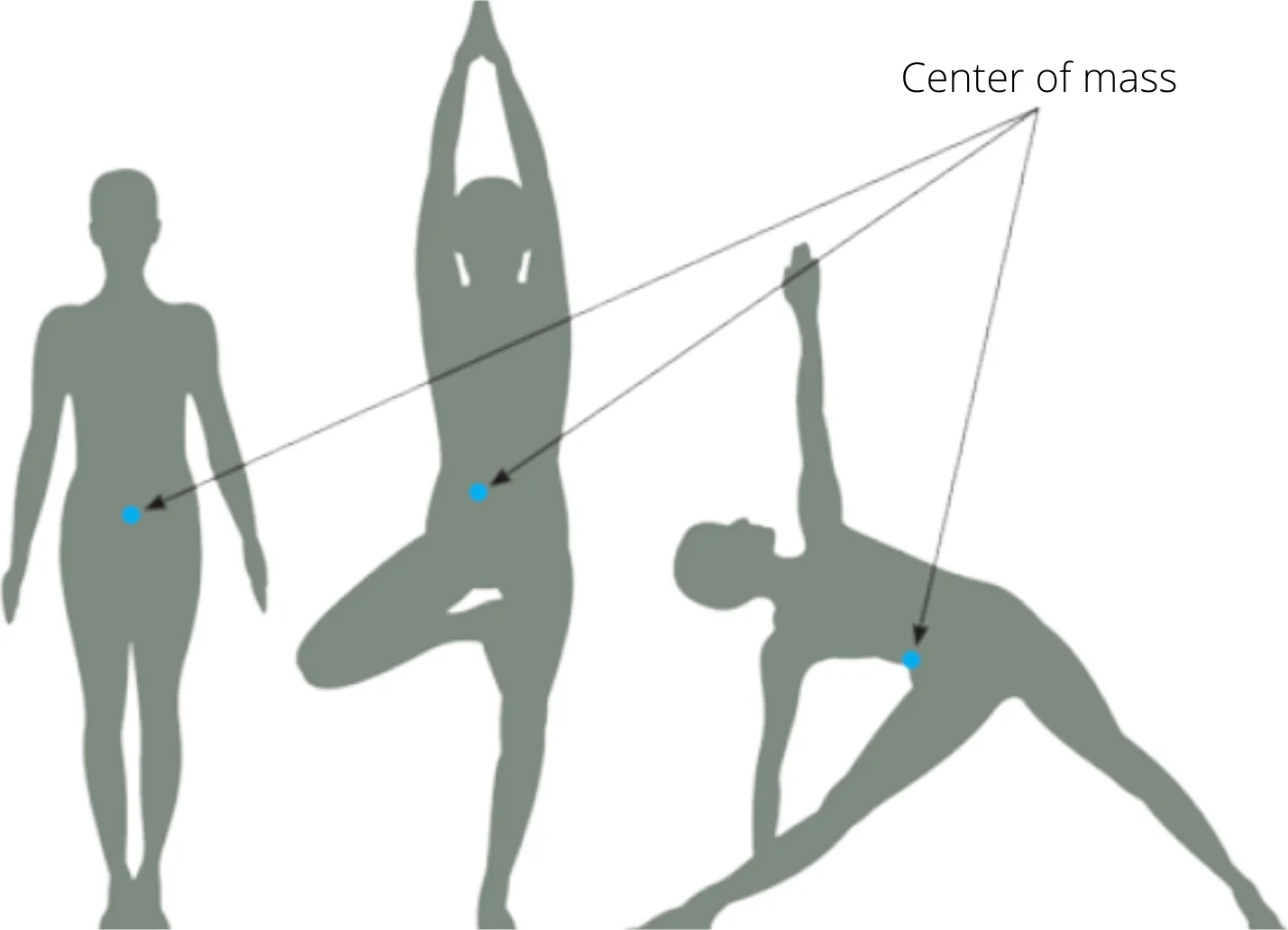
When we are standing in a normal posture, our navel is aligned with the center of two feet. As a result, we can stand. However, when we lift one of our legs up, we need to put our other leg just below the center of mass — the navel — to balance the total mass of our body. But when we try to stand on one leg with the ankle touching the wall, the center of mass is not aligned with the foot. It is slightly left or right, depending on which leg you have lifted. That’s why we fall to the other side, because our body mass is not supported by anything.
Sometimes we can observe that when a person lifts a suitcase or any heavy thing with the left hand, they tend to lean to the right side slightly, and vice versa. This is because they are trying to keep the center of mass just above the center of two feet. Otherwise, they will fall to the ground. This is the same reason you can’t do Michael Jackson’s impossible, spine-defying dance move.
Physics is the only real science. The rest are just stamp collecting.
— Ernest Rutherford