How our brain turn on Autopilot mode!
How chunking turns repeated actions into habits, why the brain saves energy on routines, and when autopilot helps or puts us at risk.
Our brain is a fantastic creation. But today, I will talk about a specific task of the brain that really amazed me.
Whenever we learn something new or take in new information, the anterior part of the brain—the prefrontal cortex—is on duty. In this time, neurons transmit the information as signals. As we follow the same routine a couple of times, the sequence gets stored in a deeper part of the brain, and the process is called chunking: a series of actions converting into a habit.
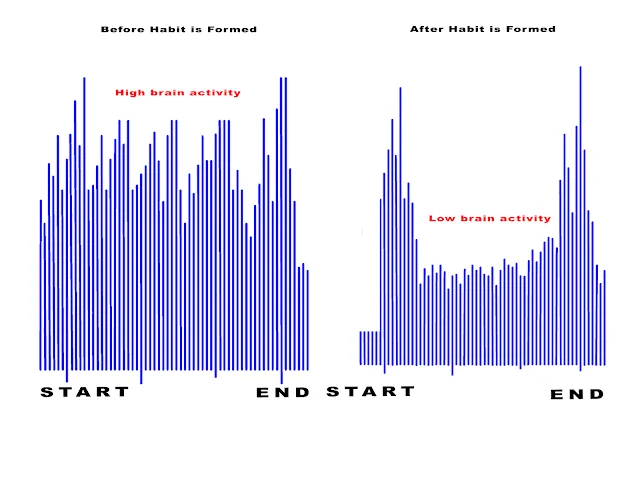
There are hundreds of behavioural chunks that we rely on every day. For example, putting toothpaste on the brush before sticking it in the mouth, washing hands before eating, getting dressed well before going outside. Whenever we are doing these kinds of activities, our brain kinda turns on autopilot mode. When we were doing these activities for the first time, neurons tend to fire and rewire using a vigorous amount of energy. However, as we do these on a regular basis, the energy spent on transmitting is reduced.
Scientists say our brain continually searches for ways to conserve energy by making anything a routine. While we are on a routine or a habit is started, the brain stops thinking constantly about these activities.
However, turning on autopilot mode at the wrong time can put us in danger. In other words, we can fail to notice something important—such as getting hit by a running car on the road. So our brain has formulated a system to decide when habits need to take over and when the conscious brain should stay in charge. At the start of any habit, the blood flow level increases extensively to match the activity with the chunk of memory where the habit was stored. After that, the blood flow level decreases and the brain works automatically without effort. Finally, when we get a reward or feel that the routine is completed at the end of that habit, it again shifts to normal conscious mode.
Can you feel how cleverly our brain works? It is just a small portion of the brain’s job that mesmerised me, although there are a plethora of others.
So how could we say that we were created automatically without the help of any almighty?